
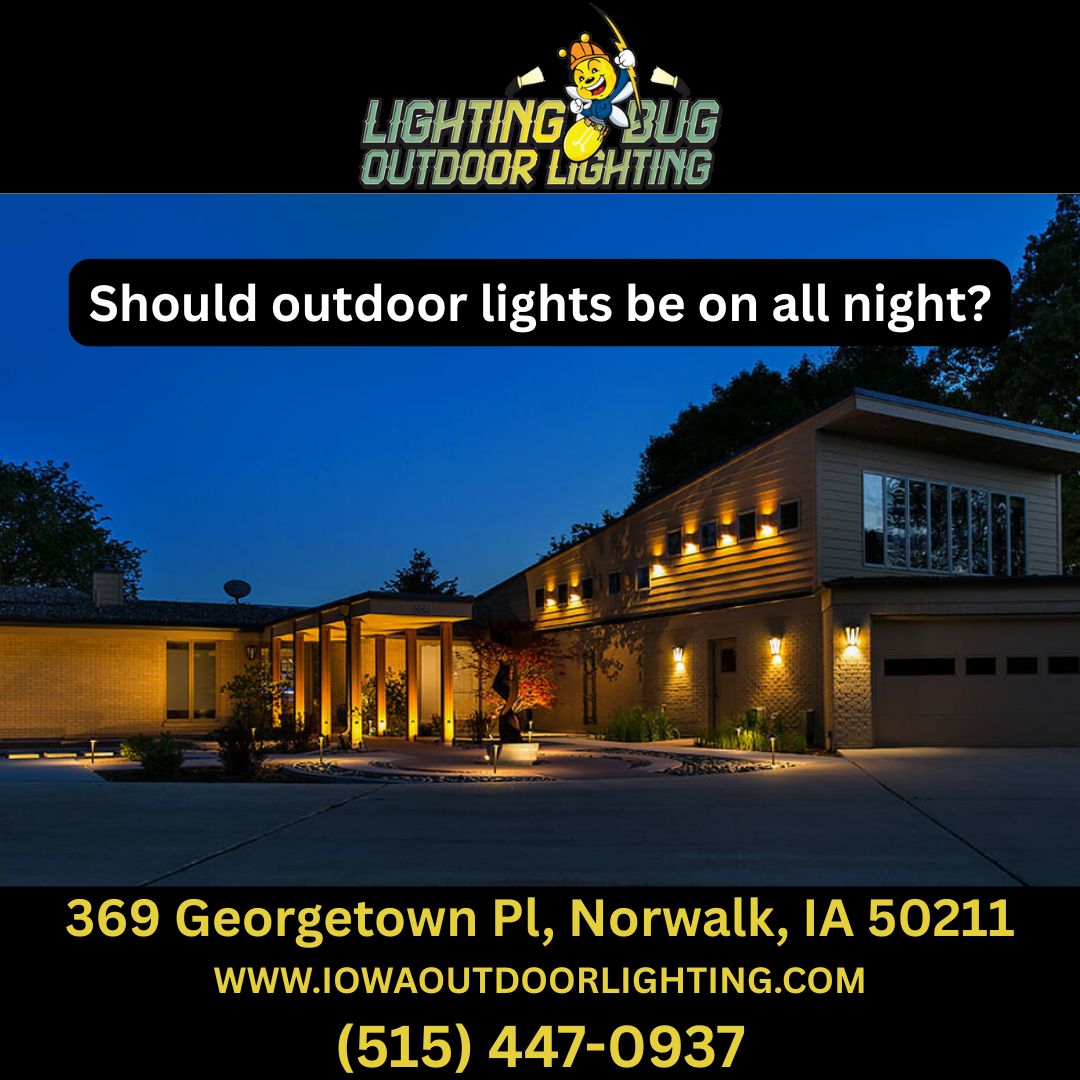
Why Homeowners Leave Outdoor Lights On Overnight
Enhancing Home Security After Dark
Security is one of the top reasons homeowners opt to keep outdoor lights on at night. A well-lit exterior can deter intruders who prefer dark and shadowed areas. When driveways, entrances, and side yards are illuminated, it creates a sense of occupancy and increases visibility for neighbors or passing patrols.
Preventing Accidents and Improving Visibility
In homes with steps, walkways, or uneven ground, nighttime lighting plays a critical safety role. Lights help residents and guests navigate safely, preventing trips and falls. This is especially important during Iowa winters when snow and ice can obscure paths.
Creating a Welcoming Curb Appeal
Overnight lighting can also enhance your home’s appearance. Strategically placed fixtures highlight architectural features, landscape designs, and entryways. Even after sunset, your home can maintain an inviting, polished look that reflects care and attention to detail.
The Downsides of Keeping Outdoor Lights On All Night
Energy Consumption and Higher Utility Bills
Keeping lights on throughout the night uses more electricity, especially if fixtures rely on older, inefficient bulbs. Over time, this continuous usage adds up, increasing your monthly energy bills. Homeowners concerned about energy waste should weigh whether all-night lighting is truly necessary in every area.
Light Pollution and Its Environmental Impact
Excessive outdoor lighting contributes to light pollution, which diminishes the natural nighttime environment. It impacts the visibility of stars and alters the ambiance of neighborhoods, reducing the contrast between night and day that’s vital to healthy sleep patterns and natural ecosystems.
Disrupting Wildlife and Sleep Cycles
Impact on Nocturnal Animals
Many animals rely on darkness to feed, migrate, and reproduce. Bright, constant lighting can interfere with their natural behaviors. In Iowa’s more rural or wooded areas, prolonged lighting may disrupt habitats of owls, bats, and other native nocturnal species.
Effect on Neighboring Properties
Unshielded or overly bright lights can spill into nearby homes, disturbing sleep and reducing privacy. It’s essential to be considerate with light direction, brightness, and placement to maintain harmony with your surrounding community.
Smart Alternatives to Leaving Lights On All Night
Motion Sensor Lights for Targeted Illumination
Motion-activated lighting provides light only when it’s needed. These lights automatically turn on when movement is detected and turn off after a short period. This option balances safety and efficiency, making it ideal for entryways, garages, and backyards.
Timers and Dimmers for Automated Control
Using timers allows you to schedule lights to turn off after bedtime or before dawn. Dimmers help reduce brightness levels during late-night hours. Both options give you more control over your outdoor lighting and help reduce unnecessary power consumption.
| Lighting Strategy | Key Benefit |
|---|---|
| Motion Sensor Lights | On-demand lighting when movement is detected |
| Lighting Timers | Scheduled on/off control |
| Dimmable Fixtures | Adjustable brightness for reduced glare and energy use |
| Shielded Fixtures | Limits light spill into neighboring homes |
| Path Lighting | Low-profile safety lighting along walkways and steps |
Safety Tips for Responsible Outdoor Lighting
Focus on Key Entry Points
Instead of lighting every corner of your property, concentrate on high-traffic areas such as the front door, back patio, and garage entrance. This ensures safety without over-lighting your space.
Use Warm Lighting to Reduce Glare
Warm light temperatures (around 2700K to 3000K) are gentler on the eyes and create a more inviting atmosphere. Avoid overly cool or harsh white lighting, which can feel stark and disrupt sleep rhythms when viewed from indoors.
Comply with Local Lighting Ordinances
Some communities have regulations on how long lights can stay on or how bright they can be. Make sure your outdoor lighting meets these standards to avoid penalties and to stay respectful of your neighborhood’s visual environment.
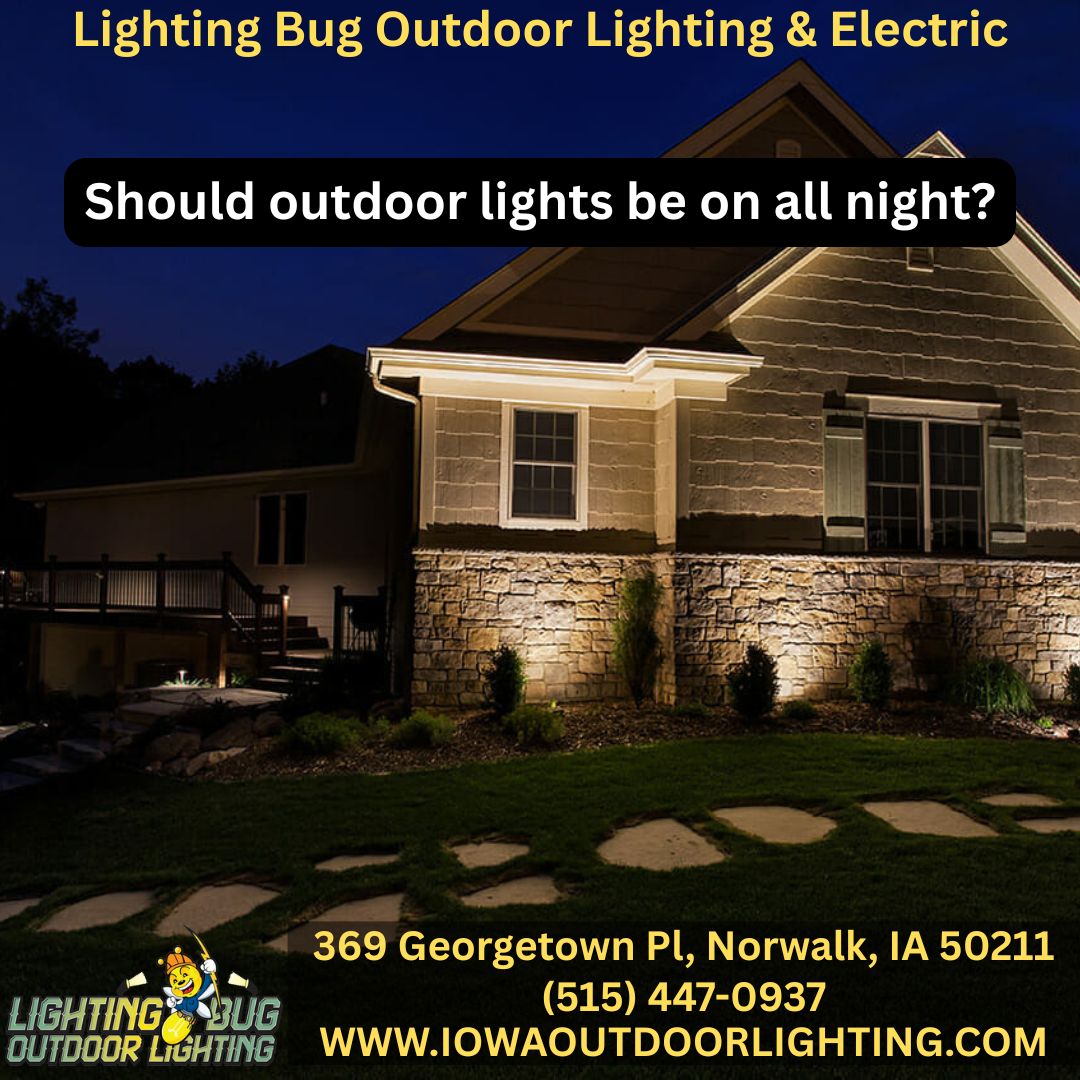
Final Verdict: Should You Leave Outdoor Lights On All Night?
The decision to keep outdoor lights on all night depends on your property’s layout, personal habits, and safety concerns. For many Iowa homeowners, a mix of strategic lighting and smart controls—like motion sensors or timers—offers a balanced solution. While continuous lighting can enhance security and curb appeal, it’s essential to weigh those benefits against energy use, light pollution, and impact on local wildlife.
Ultimately, thoughtful planning can help you get the most from your outdoor lighting without overdoing it. If you’re unsure where to start, Lighting Bug Outdoor Lighting & Electric offers custom outdoor lighting solutions designed for safety, efficiency, and aesthetic value. Visit Lighting Bug Outdoor Lighting & Electric at iowaoutdoorlighting.com to explore how you can optimize your property’s lighting with expert help.