
Smart outdoor lighting
Integration with home platforms
Connected controllers and bridges let you manage exterior zones from common home platforms or a simple app. You can group fixtures by area such as front walk, deck steps, or landscape accents and then create scenes for daily use. For example, a Welcome scene can bring pathway and porch downlights to a warm level when you arrive, while a Quiet scene dims everything for late evenings.
Voice and app control
Hands busy carrying groceries or kids in tow. Quick voice commands or app presets make it easy to brighten the driveway or turn off side yard accents from inside. Schedules and sunrise based automation also help keep the home looking lived in when you are away.
Security benefits without harsh glare
Motion activated cues can gently raise light levels near doors and garage entries. Rather than blasting a wide area with stark white light, current setups favor warm tones and shielded fixtures that direct beams only where you need them. This supports comfort for neighbors and preserves your view of the stars.
Design driven choices
Clean lines that match modern homes
Slim wall sconces, compact step lights, and low profile in ground accents are popular because they disappear by day and perform at night. The goal is to see the effect, not the fixture. In Iowa neighborhoods where homes range from new builds to classic farmhouses, simple shapes pair well with many facades.
Warm metal finishes and durable construction
Brass and heavy duty aluminum with powder coated finishes handle salt, moisture, and temperature swings. These materials age gracefully and avoid the peeling or fading you might see in lighter consumer grade products. Look for gaskets, drainage paths, and replaceable LED modules to support long service life.
Subtle highlights for curb appeal
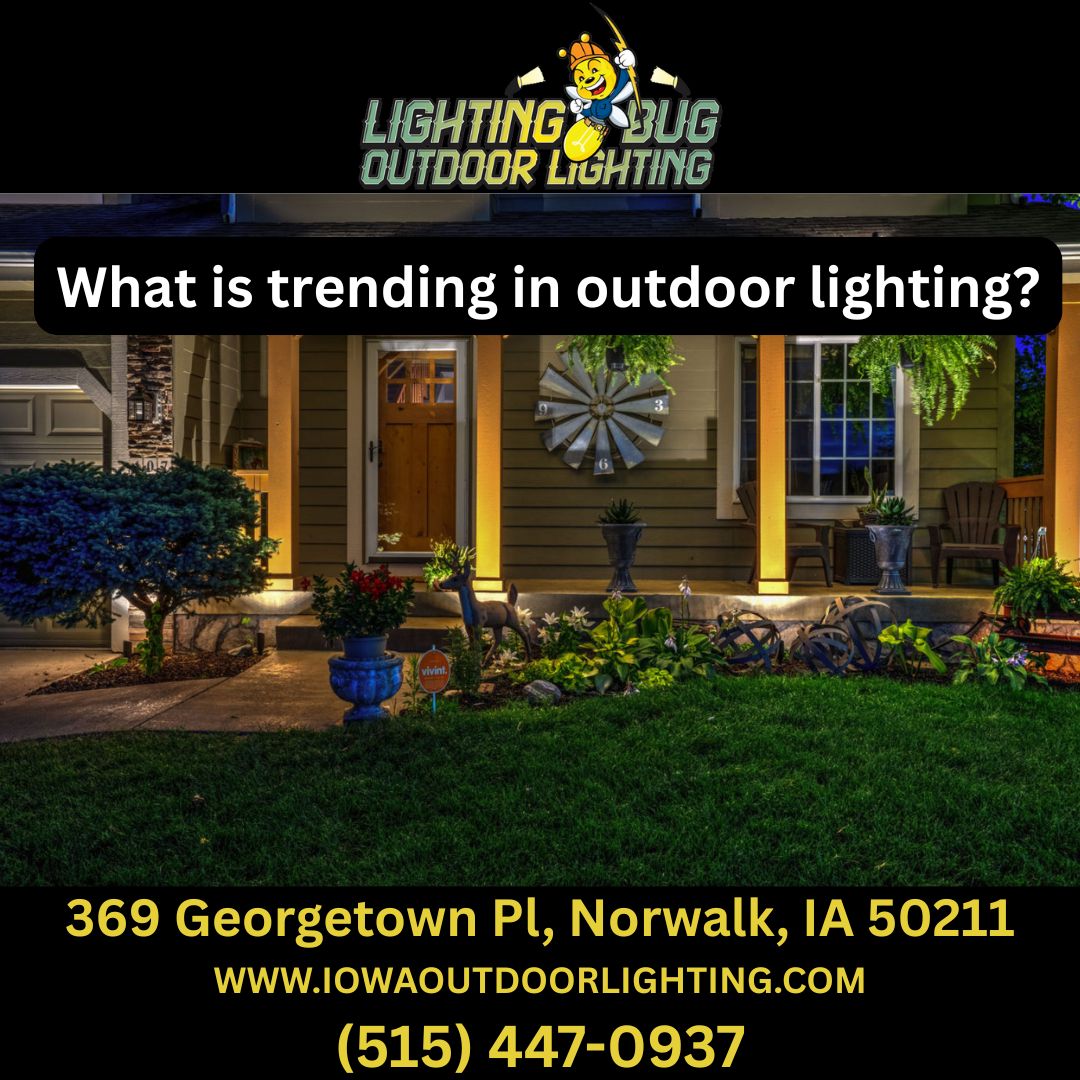
Instead of a single bright flood, designers now layer soft accents that bring out textures. A gentle wash across stone, a narrow beam to lift a column, and tiny markers along a planting bed together create depth. When snow arrives, those beams sparkle on drifts and add winter charm without overlighting the block.
Energy efficient LED and dark sky friendly practices
Lower wattage with better optics
LED sources deliver strong output with minimal power draw. The real advance is in optics. Interchangeable lenses and shrouds let a pro refine beam width so light lands on the walkway, not in a bedroom window. The result is better visibility with less spill and lower power use throughout the year.
Warm color temperatures for comfort
Two thousand seven hundred to three thousand kelvin is the sweet spot for residential exteriors. It feels welcoming, renders wood and stone beautifully, and keeps insects less interested than cooler whites. Tunable white systems add flexibility for special occasions.
Shielding and downlighting to protect the night
Caps, cowls, and louvers focus light downward. Mounting fixtures low and aiming carefully prevents uplight and sky glow. That practice is especially helpful on wide open Iowa lots where extra distance can tempt people to overlight. Thoughtful placement keeps the horizon dark and the ground safe.
Layered lighting plans that work
Path and step illumination
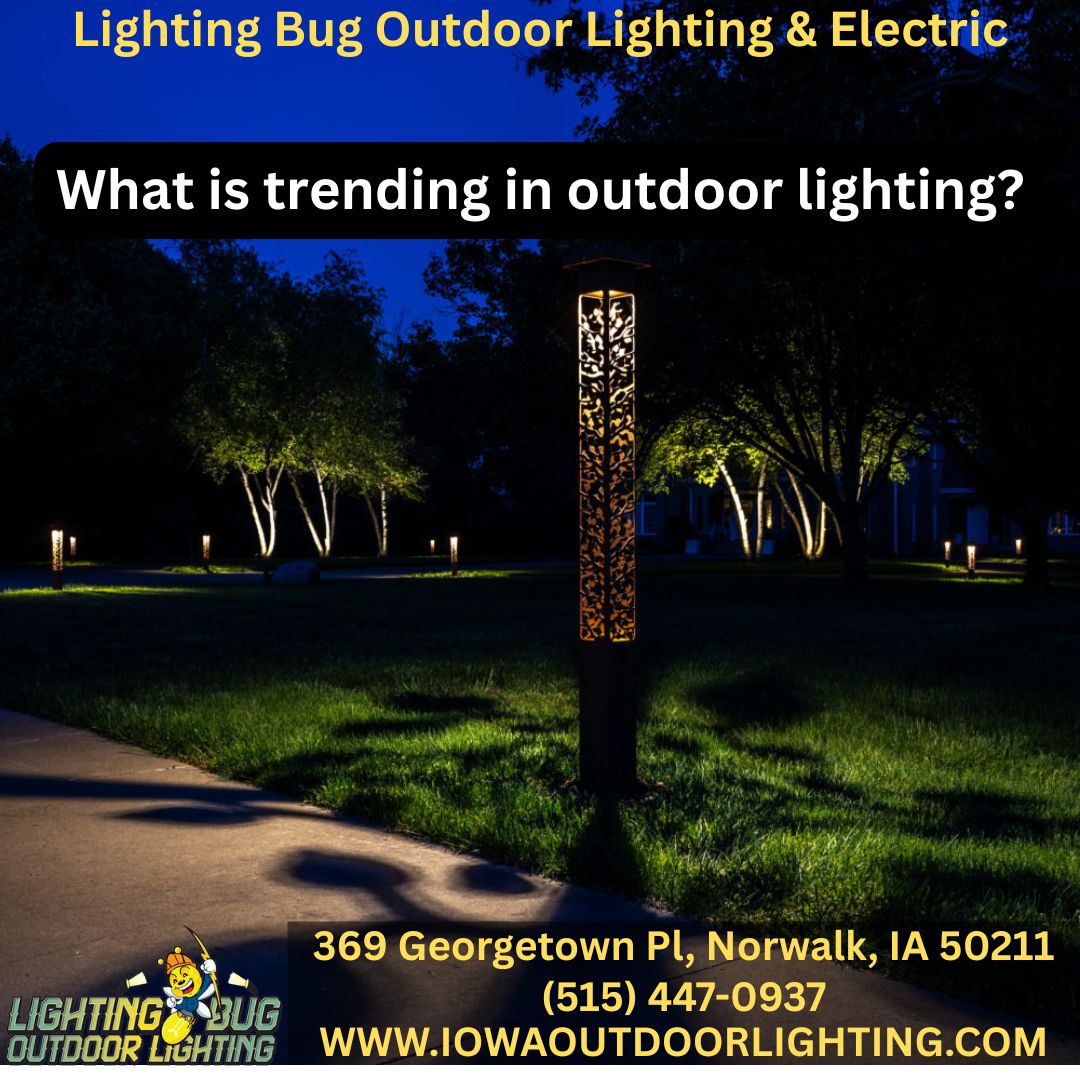
Low level fixtures along hardscape edges make walking easier, especially when ice might form. Recessed tread lights on stairs improve safety without drawing attention to the hardware. In summer, those lines of light define gathering areas for cookouts and backyard games.
Architectural accenting
Use pinpoint beams on columns or trim to add rhythm to the facade. Wash a wider portion of brick or siding to carry the eye from one element to the next. Place lights behind shrubs to create interesting shadows on walls. The balance between bright and dim areas is what creates interest.
Outdoor rooms for everyday living
Decks, pergolas, and small seating nooks benefit from soft downlights and discreet task lighting near grills or bars. Pendant style fixtures rated for exterior use can anchor a conversation area and reduce glare compared with a large flood. A little goes a long way when layers are coordinated.
Controls and automation that make life easier
Scenes and schedules
Most homeowners use two or three primary scenes. Evening for regular hours, Arrival that brightens paths, and Late Night that keeps only essential markers on. Schedules adjust with sunrise and sunset so you do not need seasonal tweaks. Vacation mode can vary timing to suggest occupancy.
Motion and ambient light response
Small sensors can raise levels when someone approaches and reduce them when the area is empty. Ambient light sensors prevent fixtures from turning on early during bright evenings. This combination saves energy and extends component life, which matters through long winters and humid summers.
Low voltage reliability and serviceability
Low voltage systems are common because they are safe, efficient, and flexible. A professional installer calculates cable runs to manage voltage drop and sizes the transformer with room for future zones. Quick connect hubs and accessible junctions simplify maintenance if a fixture is damaged by a mower or snow removal.
| Trend | What it delivers for homeowners |
|---|---|
| Layered LED plan | Balanced light with fewer hotspots, lower energy use, and comfortable nighttime appearance |
| Warm color range | Welcoming tone on wood, brick, and stone with better comfort for eyes and neighbors |
| Smart control scenes | One tap routines such as Welcome, Evening, and Late Night that fit daily life |
| Dark sky friendly aiming | Focused beams on paths and facades, reduced spill and glare, better stargazing |
| Durable materials | Weather resistant finishes and sealed housings that withstand Iowa moisture and freeze thaw cycles |
- A layered plan looks brighter and more refined than a single high output flood.
- Warm tones make exterior materials look natural during all four seasons.
- Scenes and schedules bring convenience and consistency to daily routines.
- Careful aiming protects the night while improving visibility on the ground.
- Rugged materials reduce service calls after storms, lawn work, or snow removal.
Real world Iowa examples
Front walk and entry
For a typical ranch home, three or four low level path lights can guide the walk from driveway to porch. Add a narrow beam to the house numbers so deliveries find the address after dark. A small downlight tucked under the eave near the door provides task light for keys without glare.
Backyard living areas
On a deck or patio, place recessed step lights at the risers and a soft downlight over the grill station. If you have a pergola, a pair of small pendants rated for exterior use can define the dining zone. A wide beam wash on a feature tree completes the scene and looks beautiful when leaves turn in the fall.
Large lots and long drives
Homes on acreage benefit from zone based control. The far drive can remain at a low level most of the time, then brighten when a vehicle enters. Mark the edge of pavement with discreet fixtures or small reflectors paired with shielded lights at turns. This approach uses less energy while improving wayfinding.
Common mistakes to avoid
Too much brightness
Overlighting flattens textures and creates glare. Start with lower output, then add where truly needed. The goal is contrast and comfort, not a stadium effect.
One fixture for every problem
No single product can wash a wall, mark a path, and light a step with equal quality. Mix floods, spots, washers, and markers to match tasks. This leads to a more cohesive look and better safety.
Poor placement and wiring
Fixtures tilted upward or placed in open sightlines cause glare. Cables laid too shallow risk damage from aeration or edging tools. A professional layout tucks hardware into planting beds, sets stakes deeply, and leaves service loops for easy adjustments.
How Lighting Bug Outdoor Lighting and Electric approaches projects
Listen, plan, then build
The team begins with a walk through at dusk or early evening to see how you use the space. They note gathering zones, tripping hazards, and architectural features worth highlighting. From there, they create a simple plan with zones and scenes that match your routines.
Fine tuning on site
Angles, lens choices, and dim levels are adjusted at night so you can compare before and after effects. This is where final details such as glare control, shadow play, and focal points are dialed in for the result you want.
Support through the seasons
As plants mature or hardscape changes, the layout can evolve. Routine checks confirm that lenses stay clear, stakes remain firmly set, and scheduling still fits your life. The goal is exterior light that feels right every evening, no matter the season.
Conclusion
Modern outdoor lighting trends center on efficient LED sources, warm color choices, dark sky friendly aiming, and easy to use controls that match daily life. When you consider layered light for safety and comfort, choose durable materials, and rely on careful placement, the home looks welcoming while using less energy. If you came here asking what is trending in outdoor lighting, the key takeaway is that a thoughtful plan beats a single bright fixture. Lighting Bug Outdoor Lighting and Electric is ready to help you evaluate options, design practical scenes, and install a reliable low voltage system that handles Iowa weather with ease. To learn more or start a conversation, reach out to the team or explore their site at www.iowaoutdoorlighting.com.